
What a Perris Resident Lookup Can Confirm
Every Perris resident lookup begins with picking the right record for the question. A parcel result can confirm a situs and an APN. It can also confirm a legal description and a transfer reference. A court docket connects a named party to a public case. A vital record links a person to an event. Certified-copy eligibility still governs what you can obtain, so check that before ordering. A business or professional file confirms an affiliation. A newspaper or old street directory places an occupant in a time and setting, but it does not prove where that person lives today. Choose the source that fits, and the answer stays honest.
| Record | What it can confirm | Where | Access |
|---|---|---|---|
| Assessor parcel | APN, situs, legal and transfer facts | Riverside ACR | Free public web result |
| Recorded document | Grantor, grantee, instrument and date | ACR Recorder | Free index; paid copy |
| Superior Court | Party and public docket association | Riverside court portal | Division and date limits |
| Voter status | One voter’s authenticated registration details | California Secretary of State | Self lookup with identity fields |
| Vital record | Birth, death, or marriage event linkage | Riverside ACR or CDPH | Informational versus authorized copy |
| Business or license file | Entity, license, agent, or status clue | California and local offices | Record-specific public search |
One boundary matters here. A deed, court filing, license, or business record can name a person without proving a current home in Perris. Draw only the narrow conclusion the source supports.
Build a Perris Resident Lookup Bundle
A common surname needs more than a city label to pin down. Build an identity bundle from independent clues. Use a full or middle name, a historical address, an APN, an age or event date, a spouse or associate, a business or license number, a case number, or a document number. Search compound surnames as printed and in alternate component order. Keep apostrophes, accents, hyphens, and diacritics exactly as written. Do not quietly change them.
For a verification task, anchor the name to a place first. Then compare sources in a fixed order. Start with an official identifier or a known address. Bring in the assessor only after you hold an APN or situs. Owner names are restricted from the public web result. Run a court name search with the correct division and date range. Use a vital index to test whether an event occurred. Do not assume a certified copy is within reach. Finish with the custodian whenever a formal copy is required.
- Write the known facts. Keep the original spelling, approximate date, old address, and source of the first clue.
- Anchor the location. Confirm the address, APN, jurisdiction, or case venue before searching a similar name.
- Search the strongest index. Choose recorder, court, vital, business, or license records based on the question.
- Compare a second source. Look for the same date, address, middle name, spouse, parcel, or document number.
- Label the result. Say what the source confirms, what it does not, and when it was checked.
- Docket
- The court’s case record or register of actions, not necessarily every document.
- Index versus image
- An index names or describes a record; an image or copy is the underlying document.
- Certified copy
- A copy issued with the custodian’s certification for an authorized purpose.
- Independent identifier
- A second clue, such as an APN or case number, that does not rely on the same name alone.
Perris Court Lookup Fields
Riverside Superior Court splits its online coverage into divisions. Civil and Small Claims, Family Law, Probate, and Criminal or Traffic are separate paths. Perris has no stand-alone municipal-court database. For Riverside County, civil coverage is stated from October 1991. Family law runs from April 1992 in almost all cases. Probate reaches back to July 1994. Criminal and traffic ranges vary by branch, running roughly from 1990 through 1996. A case outside a division's range may simply not appear. A purged matter may not appear either. The same goes for a restricted filing.
| Field label | Type | Required | Notes |
|---|---|---|---|
| Case type or portal | Link or button | Yes | Civil, Criminal, Family Law, Probate, or Traffic |
| Case number | Text | Mode dependent | Strongest identifier; format varies by division |
| Party or defendant name | Text | Name mode | Surname and given name; common-name results need more clues |
| Date of birth | Date | Where offered | Identity aid with division-specific limits |
| Filing date range | Date controls | No | Narrows a similar name |
| Court location | Selector | No | Riverside and regional courthouses |
A typical public docket lists the court and location. It also lists the case number, title, category, filing date, party roles, and judicial officer. It can also show register-of-actions dates, scheduled hearings, and the disposition or status. Some documents require purchase or clerk retrieval. Sealed, juvenile, adoption, confidential dependency, and protected family-law material is withheld. It never surfaces as a public name result.
The Riverside Superior Court public access page states plainly that the online result is informational. It is not the official court record. The RI-MC002 form opens a mail or in-person route. It asks for requester details, case type, location, years, a document description, copy type, delivery, and payment.
Federal matters run elsewhere. The PACER image links to the federal court record service. That service sits apart from Riverside trial access.
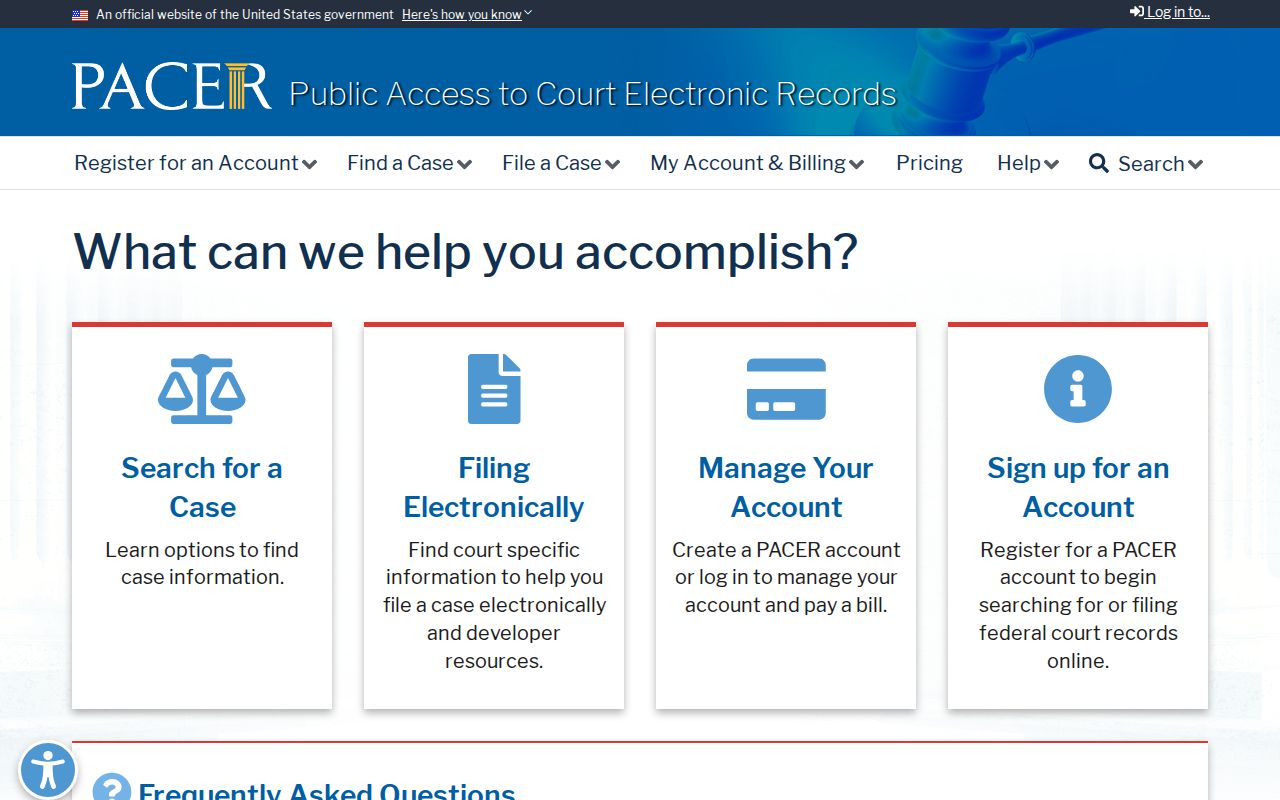
Use PACER when the local trial portal is the wrong custodian, since federal district, bankruptcy, and appellate cases live there. Account and page charges apply under the federal service's current schedule.
Perris Resident Records Need a Number
The property route works best from a known address or APN. An ACR result can show the parcel address, assessment number, GeoCode, property type, acreage, legal description, improvements, value history, and transfer dates with document numbers. Follow that transfer number into the recorder index. The recorder search then supplies party roles, instrument type, recording date, and document number. It also offers a paid regular or certified copy channel.
The vocabulary deserves care. A situs is the parcel location. A mailing destination may belong to someone who never occupies the parcel. A grantee held an interest in a recorded transaction. None of those terms alone means current residence. So for a historical occupant, pair the deed with a directory, census, newspaper, obituary, or probate file.
Note: The assessor’s transfer history can prevent a common-name search from wandering into unrelated Riverside County instruments.
Perris Resident Lookup Voter Check
My Voter Status checks a voter's own record. It asks for first and last name, date of birth, and a California driver license, ID number, or the last four digits of a Social Security number. It may show status, address, and party preference. Polling place, election information, and vote-by-mail or provisional-ballot details can also come back. It is not an open name search.
Elections Code section 2194 governs qualified voter-file requests. Election, scholarly, journalistic, political, governmental, and specified investigative purposes can qualify. The statewide file costs $100. A specific-voter request covers up to ten voters at $30 per record, capped at $100. It needs full name, date of birth, county, residence address, permitted purpose, certification, and security commitments. Sensitive identifiers and signatures stay excluded.
Safe at Home participants and other protected records must never be exposed. A blank result proves nothing. Missing status does not by itself prove a move. Treat the voter source as one limited fact in a wider Perris resident lookup.
Perris Vital Copies Have Two Paths
Vital copies follow two custodians. Riverside ACR handles county records. The fork is informational versus authorized certified copies. Anyone can generally request an informational copy of a nonconfidential birth, death, or public marriage record. Authorized certified copies demand a statutory relationship or another approved category under Health and Safety Code sections 103526 and 103526.5. Confidential marriages are restricted by Family Code section 509.
County orders go online, by mail, or in person. An authorized copy may require identity verification. A failed verification can turn into a sworn statement with notarized acknowledgment. Riverside ACR issues a certificate only when the event happened in the county or the marriage license was issued there. CDPH forms and the state fee schedule cover the statewide path. Divorce certificates come through CDPH for qualifying years. The Superior Court keeps the decree and case file.
The 2026 schedule lists county birth at $34. State birth runs $31, death $26, and public marriage $19. A confidential marriage certificate costs $19 county, and the CDPH dissolution certificate $18. Confirm the current form and fee before ordering. A Certificate of No Record describes the search result, not a family history. The Department of Consumer Affairs screen is a different kind of identity source, showing the value of a named state custodian and a record-specific result.
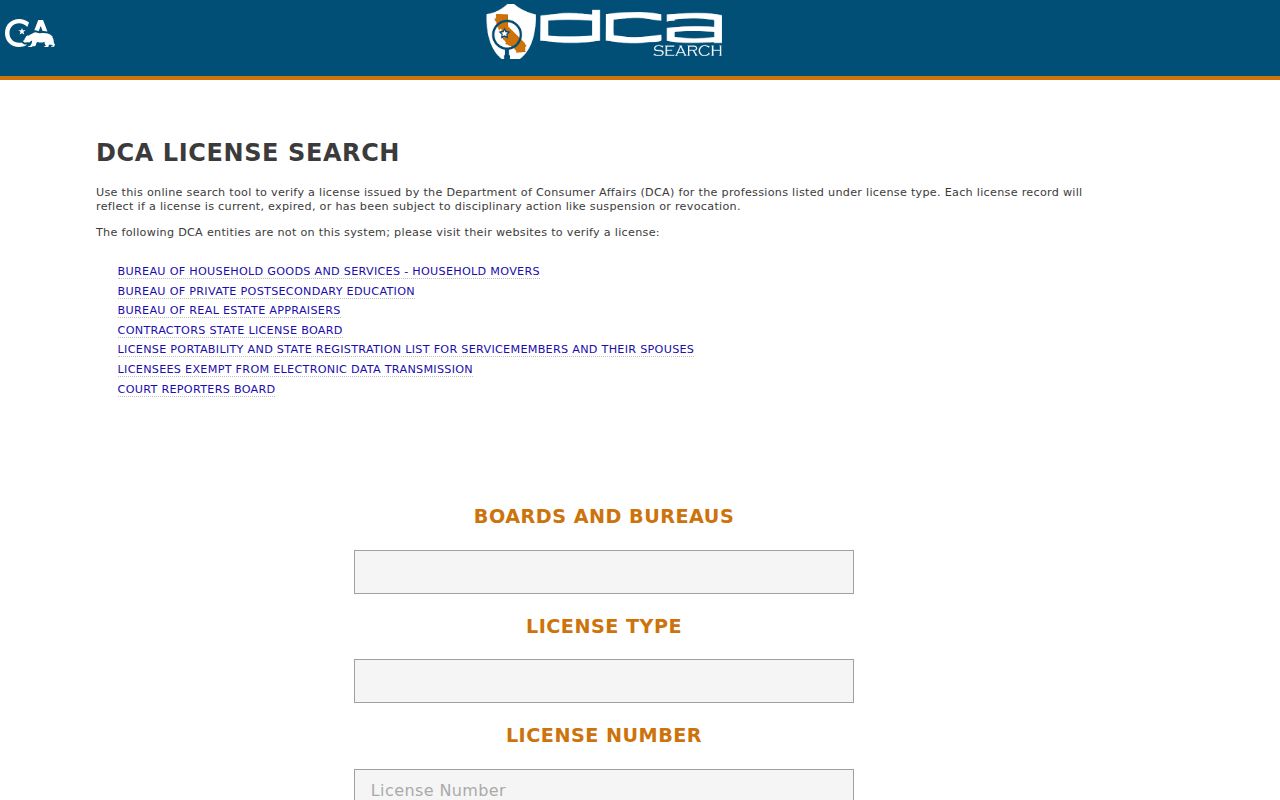
The California license search returns whatever the board permits. That can include license type, status, and discipline links. Treat it as an affiliation clue rather than the record that answers the question.
Perris Probate and Heir Trail
Probate fits when the question is an estate, a successor, or an heir and the filing is public. Riverside probate cases go back to July 1994 online. Search by party, decedent, petitioner, or case number. Then connect the case to recorded successor or transfer documents and the parcel legal description. Public filings can hold useful names and relationships. Sealed exhibits and protected identifiers stay out of view.
A birth-parent question runs through California adoption information, consent, or court processes instead. An ordinary birth-record search is not an open parent directory. For a deceased resident, weigh an obituary or cemetery clue against a death record and probate file. For a former classmate, yearbooks and newspapers beat a modern name search.
Custody questions use a different source family. The Riverside Sheriff inmate system and the California Department of Corrections and Rehabilitation locator each return status fields under their own rules. A custody result never proves a current Perris address. An absent result proves nothing about past custody. Every route here has its own custodian. A Perris residents directory works best when it names that custodian rather than treating records as interchangeable.
Perris Business and License Links
California bizfile Online searches an entity name or number. It returns legal name, type, status, agent, and filings. DCA searches run by board, license type, first and last name, license number, city, or county. Riverside fictitious business name records and the Perris city license system add county and municipal filings. A number or status can separate one person from many who share a common name.
A business address is an affiliation, not a home. An agent address may just be a service address. A city license confirms a regulatory record, nothing more. Cross-check with the entity number, license number, filing date, or project number. The California Secretary of State business search and the Perris licensing portal are the right starting points. The State Controller unclaimed-property search adds a name and reported-city clue. A claim still needs identity evidence.
Correct a Perris Match at the Source
Two records that clash cannot be split down the middle. Take the dispute to whichever office owns the file. A deed correction is ACR's business. A docket error belongs to the court clerk. City permit questions go to Perris Development Services or the City Clerk. Vital certificates follow Riverside ACR or CDPH rules. Commercial data brokers run their own opt-out channels. Pulling a name from a commercial index never changes the government record behind it.
No online index fits an existing, identifiable record. A narrow California Public Records Act request works then. Spell out the office, the record type, and the date range. Also list any APN, case number, project number, or name variants. CPRA does not force an agency to build a resident list. It does not force one to hand over exempt personal data. Save the response alongside your notes. Federal questions start with geography confirmed by the Ninth Circuit district-court directory. Then move to PACER.
Privacy Limits on Perris Resident Lookup
A Perris resident lookup has real blind spots. It can miss household members, people absent from public filings, protected voters, DMV address data, utility customers, modern student records, and Safe at Home participants. California treats privacy record by record. Government Code sections 6205 through 6211 shield qualifying Safe at Home participants, and section 6208.1 limits public display once a nondisclosure demand lands. Elections Code section 2194 governs voter-file use. The Driver's Privacy Protection Act locks down DMV information.
Lawful personal use. Use a Perris resident lookup for respectful family, civic, historical, or record-verification work. Never use a result to stalk, harass, threaten, impersonate, or publish a protected address.
People-finder sites stitch together stale, mismatched feeds. Treat their output as an unverified lead. Then go back to the named custodian of the record. A careful Perris lookup states plainly what turned up, when, and what is still unknown.
A one-person question sometimes widens into an address or block question. At that point the Perris street directory is the natural next step. Historical collection is a different route. A past residents entry in a city directory needs its own edition and page provenance.