
Perris City Directories on the Shelf
The first task is to separate verified coverage from a tempting but unsupported claim. No authoritative online catalog found a complete standalone Perris publisher and year run. A city-hosted environmental report does verify selected reverse-directory editions and street images. The library, Riverside repositories, the historical museum, FamilySearch, newspapers, and archives remain the places to ask about broader city directory holdings.
| Collection or source | Years or coverage | Where held | What it adds |
|---|---|---|---|
| Reverse directory snapshots | 1971, 1976, 1980, 1985, 1992, 1995, 2000, 2005, 2010, 2014, 2017 | City-hosted environmental reports | Street, number, listed occupant or institution |
| Local and county newspapers | Title-specific runs; verify each title | Perris Library, UCR, digital newspaper collections | Obituaries, marriages, addresses, community ties |
| Population census | 1850 to 1950 public schedules | NARA, FamilySearch, library databases | Household members, ages, birthplace, address clues |
| School yearbooks | Title-specific; no complete online run verified | Library, schools, historical museum | Students, faculty, groups, dated affiliations |
| City, telephone, and regional directories | Publisher and gaps require catalog confirmation | Library, Riverside repositories, museum | Alphabetical or cross-reference entries |
The table is a research map, not a promise that every volume is open or present. Ask the Perris Library for catalog terms such as Perris directory, Riverside County directory, telephone directory, cross reference, criss cross, Haines, and Polk. Request the publisher, inclusive years, missing years, format, and whether the volume is alphabetical or address ordered before planning a visit.
Perris Library and Directory Roots
Perris’s library story is a useful guide to where older local references may have moved. Riverside County’s first library opened in Henry Akin’s general store on D Street in 1882. The county system formed in 1911, sent its first collection to Perris, and a 4th Street library followed in 1916. Later service points included City Hall and the former post office at 424 D Street. The present 20,000-square-foot branch at 163 E. San Jacinto Avenue opened in 1994.
The Riverside County library history supports those place names and dates. The Perris branch page is the current contact route for hours, catalog help, genealogy databases, newspapers, reference work, and interlibrary loan. A shelf history does not prove that a particular city directory is held there, so ask staff to verify the item.
The library-history image below is linked to the Riverside County library history.
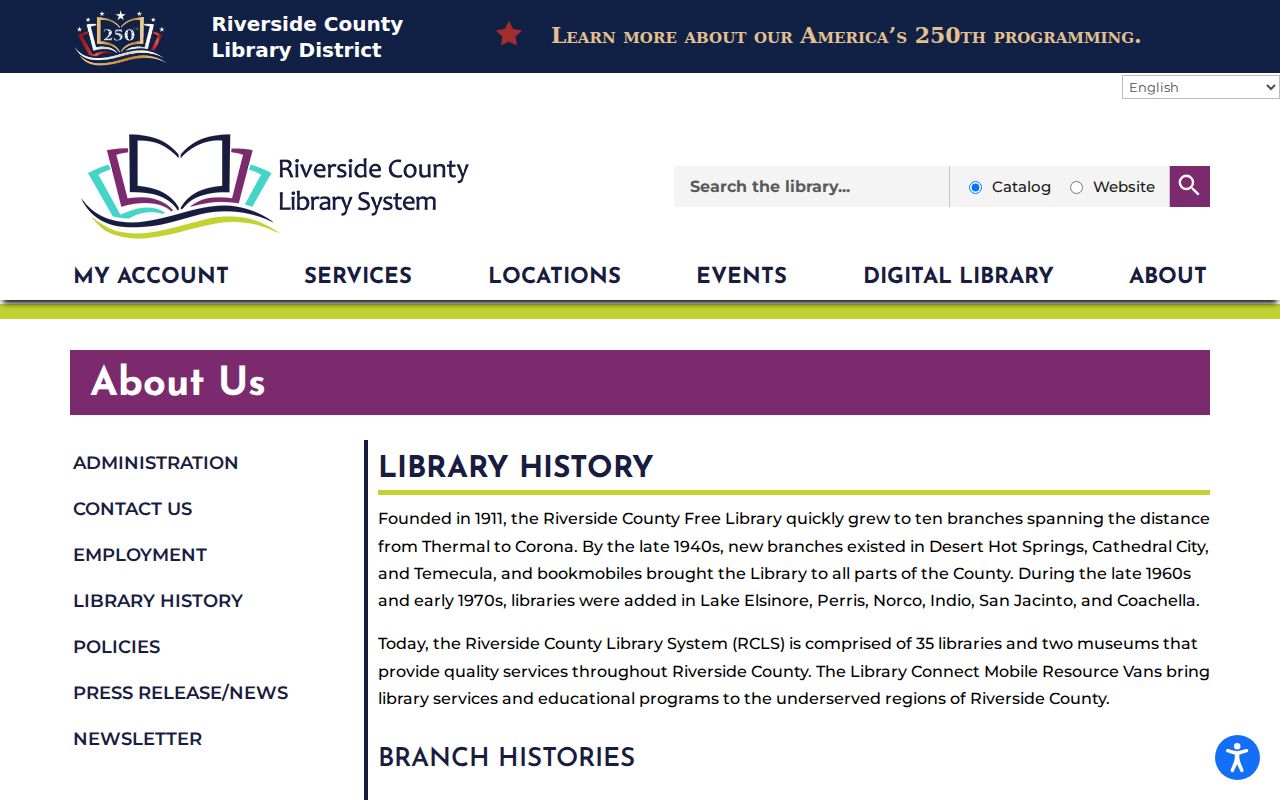
Knowing the former locations helps a newspaper search. A notice that says “the library” or names a D Street or City Hall location may point to a different era of the same institution.
Verified Perris Reverse Directory Years
The most concrete Perris city directory evidence comes from a city-hosted EDR City Directory Image Report for Evans Road and Rider Street. Its research summary identifies EDR Digital Archive, Cole Information, and Dun & Bradstreet snapshots for 1992, 1995, 2000, 2005, 2010, 2014, and 2017. It identifies Haines Criss-Cross editions for 1971, 1976, 1980, and 1985. A second city-hosted report corroborates 1980 through 2017 for its own target and notes that two earlier target streets were absent. The Perris Valley Historical Museum is another repository to ask about photographs, donated files, and local holdings.
The report’s sampled pages run from 1976 through 2017. A 2017 page is arranged as street heading, edition year, ascending house number, and surname-first occupant or institution. Examples include a named school and surname-first entries with a given name and middle initial. The sample does not show a spouse, trade, phone, owner or occupancy-duration field. A reverse directory is therefore a narrow address clue, not a complete city directory or a universal household record.
Absence is especially weak around Perris edges. The research notes that reverse listings concentrate in developed areas and newer districts may appear only in recent editions. Try the alternate street form, nearby numbers, adjoining streets, and a later or earlier edition before treating a blank page as evidence.
Read a Perris Directory Entry
A directory entry has meaning only when its edition, page, and section are saved. Photograph or transcribe the title page, publisher, year, place, and abbreviation key before copying a name. Separate the publication year from the canvass or cutoff date. A listed street number can be a strong clue, but it may reflect a business, an institution, or an older numbering system rather than a household.
| Name line | Usually surname first, then given name or initial; compound surnames need careful copying. |
|---|---|
| Street line | House number and street heading in a reverse section. |
| Institution | A school, business, or public organization can occupy a number without being a resident. |
| Year and page | Fixes the entry to the edition that was actually read. |
| Abbreviation key | Defines marks used by that publisher; do not borrow a key from another volume. |
A classic alphabetical volume may add a spouse in parentheses, occupation or trade, residence marks, widow notation, or an employer abbreviation. The verified Perris reverse sample should not be described as showing those fields because its pages do not. If the target name is missing, test married-name indexing, surname order, diacritics, rural routes, moving, and directory coverage before assuming the person was not in Perris.
Perris Criss-Cross Directory Terms
A criss-cross or reverse directory changes the search direction. An alphabetical city directory starts with a surname and may lead to an address. A criss-cross section starts with street and number and may lead to an occupant or business. A householder index is an alphabetical finding aid for a person or household. An abbreviation key is the publisher’s glossary for marks and shortened words.
- Criss-cross directory
- A street-order section that arranges entries by address.
- Householder index
- An alphabetical index that helps locate a person or household in a volume.
- Edition
- A particular publication year and publisher, which may not cover every local street.
- Cutoff date
- The date or period when names and addresses were gathered, which can differ from print year.
- Source image
- A scanned page or report image that should be saved with its title and page context.
For Perris, use the term that matches the holding. Calling a verified reverse page a classic alphabetical volume would add fields the source does not show. The distinction also prevents a modern street entry from being used as if it were a nineteenth-century social directory.
Trace Perris Directory Households
Tracing a household through a Perris city directory works when every move is treated as a new fact. Start with a known name and year, then check the same person in the next verified edition. Record the address exactly, note spelling and initials, and look for a street-order entry at the number. A later disappearance can mean a move, death, omission, a coverage gap, or a changed street form.
- Fix the starting edition. Copy publisher, year, page, street, number, and name exactly.
- Test the next edition. Search surname, given name, compound-name order, and known street variants.
- Flip the search direction. Use the reverse section for the old number and nearby numbers.
- Pair a second source. Compare census, newspaper, yearbook, deed, obituary, or probate evidence for the same period.
- Explain the gap. Mark the result as moved, unlisted, outside coverage, or unresolved instead of filling the blank.
For modern address-keyed research, the Perris street directory by address handles the parcel and current-record chain. The historical task stays focused on how the printed or scanned volume was organized.
Pair Perris Directories With Census
Federal census schedules give a household layer that a deed cannot. Public population schedules run through 1950 under the 72-year release rule. NARA, FamilySearch’s Perris-area birth and death collection, and library databases can show household members, ages, birthplaces, occupations, and sometimes an address or enumeration district. Early rural enumeration may use community, township, or route terms rather than a modern Perris street number.
Use a directory as a bridge between census years. A directory around a census date can suggest a move or a household member, while the census can test age and relationship clues. Do not force a match from a surname alone. Use birthplace, spouse, middle initial, trade, address, and neighbors where the source makes them public. The National Archives at Riverside is physically in Perris and can be contacted for federal census, land, naturalization, military, and court material by appointment.
Bridge the 1890 Perris Census Gap
The 1890 federal population schedules were largely destroyed nationally. For an early Perris family, replace the missing census with a source chain: county or predecessor-county deeds, local newspapers, church or cemetery records, probate, voter or poll material where lawfully available, and the library’s historical collections. Riverside County was created in 1893 from parts of San Bernardino and San Diego counties, so a pre-1893 Perris-area lead may sit under a predecessor county.
Perris incorporated in 1911. City minutes and ordinances therefore belong to the municipal era, while land and family records can be older. The county library timeline and the 1890 Sanborn sheet offer place clues, but no Sanborn year beyond August 1890 was verified. A date on a map or directory should never be expanded into an invented run.
The California State Archives can point to catalogs and finding aids for state, county, and city materials. The Library of Congress Sanborn collection is useful for map searches, while the State Archives home page linked below is a repository guide rather than proof that a particular Perris directory is digitized.
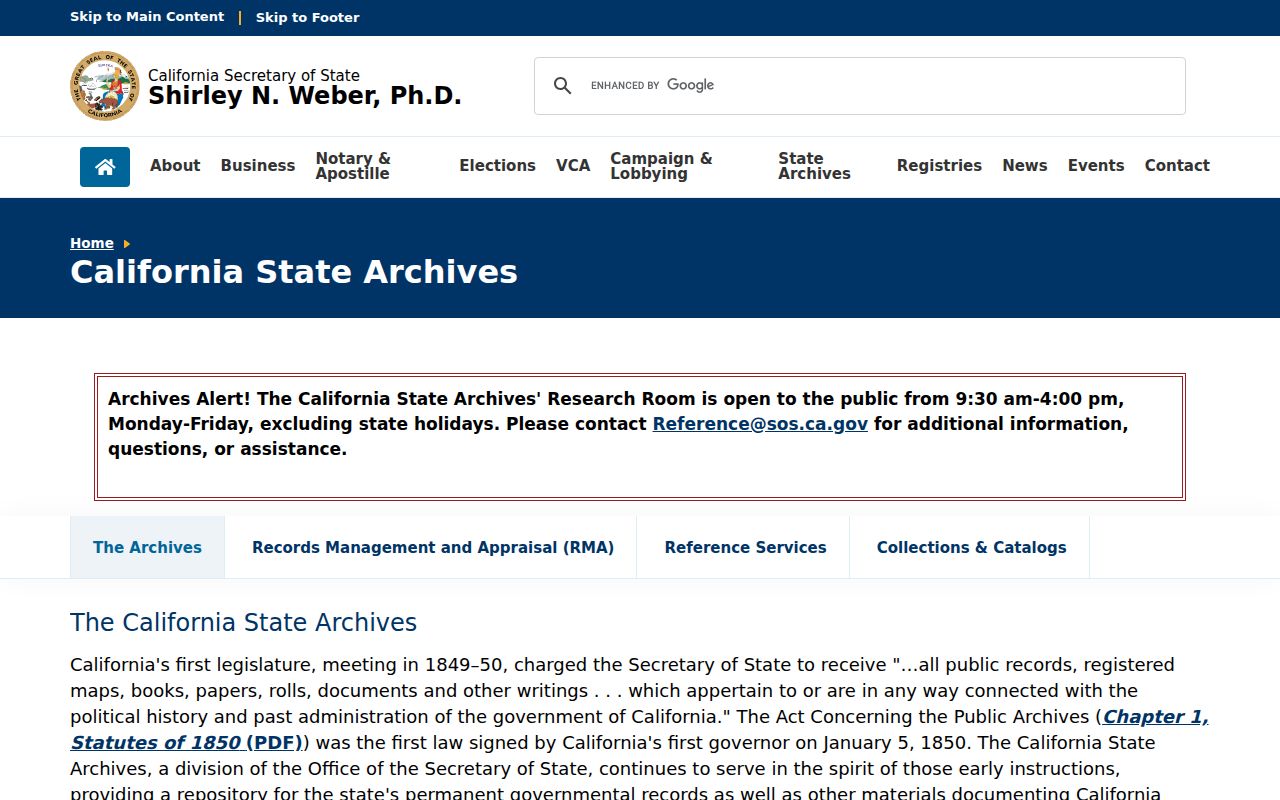
Use the archives image with the county and city records collection guide when planning a deeper request. The title, finding aid, and record group are the facts to carry forward.
Search Perris Names Faithfully
Names in a Perris city directory may be indexed under a spouse, a widow notation, a business name, or a different order for a Spanish compound surname. Search exact publisher style and then broader variants. Keep hyphens, apostrophes, accents, and middle initials in the notes. The California diacritical-marks guidance reflected in 2026 permits approved marks on vital records, so a directory spelling and a later certificate may differ without describing different people.
Do not “correct” a source while transcribing it. Put the printed form in quotation marks in research notes, then add a normalized form only for your own sort. Compare the result with a dated newspaper, census, deed, obituary, or yearbook. A commercial people-finder result can suggest a spelling, but the library, archive, court, or custodian record supplies the support.
A useful note also preserves negative evidence. Write down the editions searched, the street or surname form used, and whether the target page was absent, unreadable, outside the reported coverage, or simply not held. In Perris, that detail matters because the EDR reports are targeted street snapshots rather than a guaranteed citywide sequence. A later researcher can then repeat the same search without mistaking a missing scan for a missing person.
When an old entry points to a parcel, carry the house number and street variant into the assessor and recorder route. When it points to a person, compare a dated public source before linking it to a modern record. The page, year, publisher, and repository are the evidence that makes the conclusion durable.
A careful city directory search ends with provenance: publisher, edition, page, image or shelf, access date, and the exact words seen. That record makes a family-history conclusion checkable.